
The IMM Archive
Explore past publications, commentary, interviews and video presentations from the International Monetary Monitor.

The IMM Newsletter
Latest IMM Newsletter editions:
Full IMM Newsletter Archive including all past editions.
Other Monetary Articles
Kevin Warsh just revealed a huge change for the Fed. The press missed it.
Fortune Magazine article by John Greewwood and Steve Hanke In this op-ed version of IMM Newsletter #56 Steve Hanke joins me to lay out some of thebasics of monetary analysis which the consensus of economists, and especially those at theFed, have systematically – and, in retrospect, foolishly – ignored over the past two or threedecades.First, we point out that only a handful of monetarists – including ourselves – successfullypredicted the post-Covid inflation. Second, we explain some of the reasons why mosteconomists got their forecasts wrong. Third, we show how Fed Chair Kevin Warsh’s answersto questions from journalists at his post-FOMC meeting press conference on September 16were dramatically different in style from the answers that would have been given by hispredecessor, Jerome Powell. The tone of his replies was distinctly monetarist. This is why,for example, he would not give an answer to the typically consensus question about thenatural or equilibrium rate of interest (known to economists as r*). It is not relevant tomonetarists.At his first two press conferences in June and July Warsh made a shaky start. However, heis now speaking with much more confidence and authority as he shapes a framework that isstarting to sound notably more coherent than that which the Fed was following previously. Read the full article on Fortune →
Scott Bessent and the bond market: a pointless intervention
In this op-ed, Steve Hanke and I assess the prospects of success for US Treasury SecretaryBessent’s intervention in the government bond market. We cite three prior examples of“Operation Twist” which do not have a good record. The problem is that unless theunderlying fiscal policy is changed (e.g. reducing the budget deficit), or unless monetarypolicy is shifted in a helpful direction (in this case, tightening to lower the current inflation),the government’s attempt to fix bond yields is contrary to fundamentals. Read the full article on Fortune →
Japan’s monetary conundrum — why the yen hit a 40-year low as interest rates hit a 31-year high
A common misconception is that, because interest rates in Japan have been abnormally lowfor most of the past 30 years, monetary policy in Japan has been “easy”. In this article, SteveHanke and I explain that monetary policy in Japan has not been easy; on the contrary it hasbeen tight when judged by the anaemic growth of the broad money supply. To achieve asustainable 2% inflation rate, Japan would need about 5% p.a. money growth, not the 2-3%it has typically experienced. This helps to explain some of the conundrums evident in Japantoday. Read the full article on Fortune →
Full Other Monetary Articles Archive
Kevin Warsh just revealed a huge change for the Fed. The press missed it.
Fortune Magazine article by John Greewwood and Steve Hanke In this op-ed version of IMM Newsletter #56 Steve Hanke joins me to lay out some of thebasics of monetary analysis which the consensus of economists, and especially those at theFed, have systematically – and, in retrospect, foolishly – ignored over the past two or threedecades.First, we point out that only a handful of monetarists – including ourselves – successfullypredicted the post-Covid inflation. Second, we explain some of the reasons why mosteconomists got their forecasts wrong. Third, we show how Fed Chair Kevin Warsh’s answersto questions from journalists at his post-FOMC meeting press conference on September 16were dramatically different in style from the answers that would have been given by hispredecessor, Jerome Powell. The tone of his replies was distinctly monetarist. This is why,for example, he would not give an answer to the typically consensus question about thenatural or equilibrium rate of interest (known to economists as r*). It is not relevant tomonetarists.At his first two press conferences in June and July Warsh made a shaky start. However, heis now speaking with much more confidence and authority as he shapes a framework that isstarting to sound notably more coherent than that which the Fed was following previously. Read the full article on Fortune →
Scott Bessent and the bond market: a pointless intervention
In this op-ed, Steve Hanke and I assess the prospects of success for US Treasury SecretaryBessent’s intervention in the government bond market. We cite three prior examples of“Operation Twist” which do not have a good record. The problem is that unless theunderlying fiscal policy is changed (e.g. reducing the budget deficit), or unless monetarypolicy is shifted in a helpful direction (in this case, tightening to lower the current inflation),the government’s attempt to fix bond yields is contrary to fundamentals. Read the full article on Fortune →
Japan’s monetary conundrum — why the yen hit a 40-year low as interest rates hit a 31-year high
A common misconception is that, because interest rates in Japan have been abnormally lowfor most of the past 30 years, monetary policy in Japan has been “easy”. In this article, SteveHanke and I explain that monetary policy in Japan has not been easy; on the contrary it hasbeen tight when judged by the anaemic growth of the broad money supply. To achieve asustainable 2% inflation rate, Japan would need about 5% p.a. money growth, not the 2-3%it has typically experienced. This helps to explain some of the conundrums evident in Japantoday. Read the full article on Fortune →
Something will cause inflation to go up this year, but it’s not oil
The consensus reaction to the jump in oil prices following President Trump’s attack on Iranon February 28 was that this would inevitably mean inflation. Steve Hanke and I respondedto this common fallacy by pointing out that oil and other commodity prices are relativeprices, while inflation requires a rise in the overall level of prices, which in turn requires priorrapid growth of the broad money supply. Inflation may rise in 2026, but if so, it will be due toexcess money growth, not merely a rise in the price of oil. Read the full article on Fortune →
Monetary policy is not about interest rates, it’s about the money supply
A common view is that monetary policy is all about interest rates: higher rates for a tighterpolicy, lower rates for an easier policy. But this is at best superficial. Interest rates arethemselves subject to the rate of inflation, which depends on money growth over thepreceding two years or more. Illustrating with three different examples, Prof. Steve Hankeand I show that money growth is what really matters for inflation, and in turn for interest ratelevels in the particular countries. Read the full article on Fortune →
Fed Chair Jerome Powell is trying to explain away the inflation rollercoaster – but money supply is absent from his script
In this op-ed from August 2024 Prof. Steve Hanke and I dismissed the widespread notionthat the post-Covid inflation was a worldwide phenomenon. Summarising a study weconducted of 27 developed and emerging economies, we found very different rates ofinflation. The common theme was that those which had higher inflation had allowed moneyto grow rapidly, while those with lower or negligible inflation had kept money growth firmlyunder control. Central bank governors like Jerome Powell at the Fed or Andrew Bailey at theBank of England were wrong to blame external factors such as supply chain disruptions orthe Ukraine war for domestic inflation. Inflation is always and everywhere a monetaryphenomenon. Read the full article on Fortune →
Other Publications
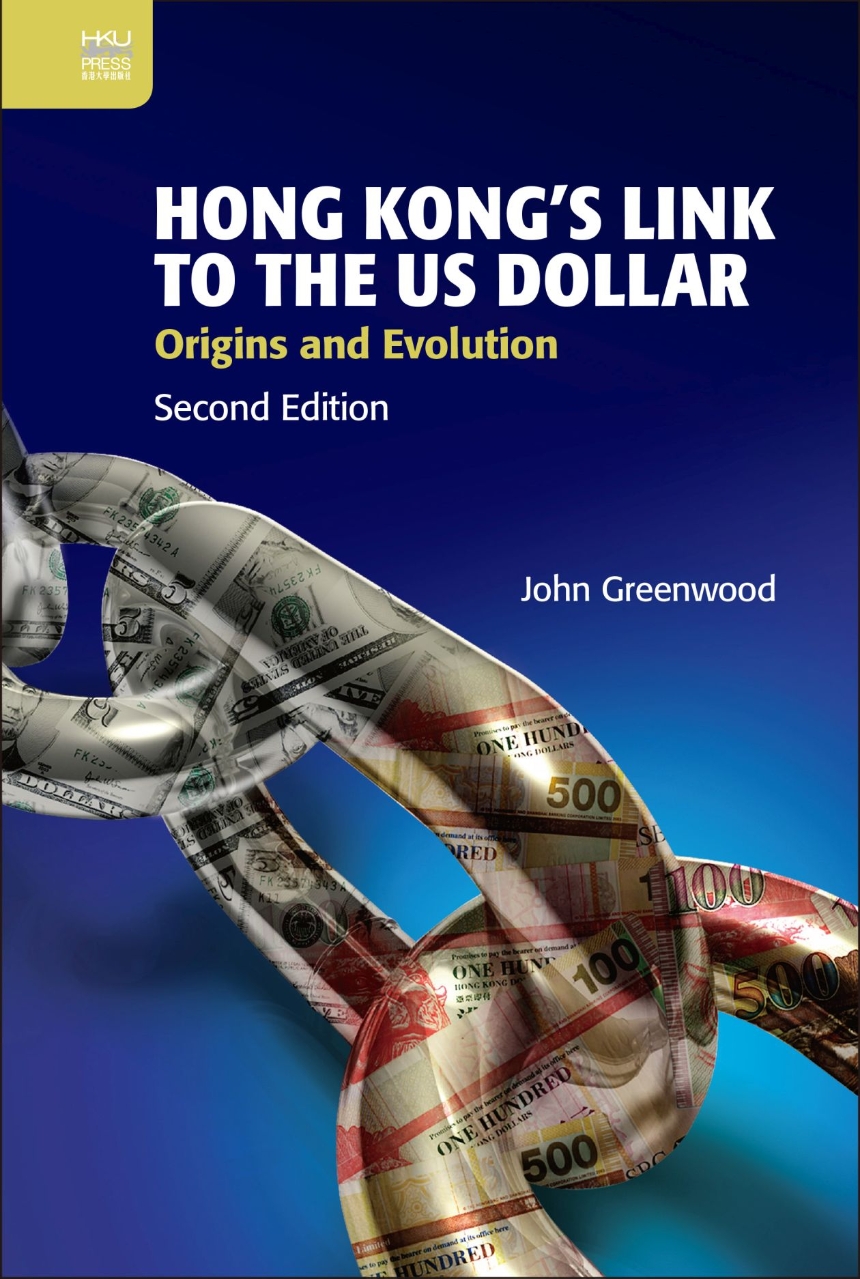
Hong Kong’s Link to the US Dollar
Origins and Evolution – Second Edition
This updated edition of John Greenwood’s authoritative study explains the origins and development of Hong Kong’s linked exchange rate system. Drawing on first-hand analysis and key historical documents, the book examines the city’s currency crises, the creation and reform of the currency board, and the evolution of the monetary framework from 1983 through to 2020.
It provides readers with a clear understanding of why Hong Kong adopted the linked system, how it has operated in periods of stress, and how the framework has been strengthened over time.
Money and Banking in Contemporary Japan:
The Theoretical Setting and its Application
This important book is a translation by John Greenwood of lectures given by Dr Yoshio Suzuki at Tokyo University when the translator was a graduate student there in the 1970s. Dr Suzuki was at the time Head of the Economic Research Division of the Bank of Japan. Although no longer in print, the book can be obtained through academic libraries.
The framework is very similar to that used by broad money monetarists today. The ideas set out in the book formed the basis for the critical decision by the Bank of Japan to control broad money (M2+CDs) from July 1974 onwards for the next decade (see p. xv). This gave Japan a high degree of economic stability and gradually reduced inflation so that when the Second Oil Crisis occurred in 1979-80, Japan largely avoided inflation.
Unfortunately, the Plaza (1985) and Louvre (1987) agreements forced Japan to abandon this framework, leading directly to the great asset bubble of the late 1980s and the subsequent crash in the 1990s. The Japanese economy has never again enjoyed the stability of that golden decade.
John Greenwood's Course on the Monetary Theory of Asset Prices
Introduction
Why Money Matters for Investors
How Money is Created
Quantifying the Impact of Money - Part 1
Quantifying the Impact of Money - Part 2
Money Creation and the Exchange Rate Regime
Money and Shadow Banking
Summary: Money and the Business Cycle
Money Counterpart Analysis
Case studies of Hong Kong and Australia
Summary: Drivers of Change in Monetary Growth
Money and credit in Financial bubbles and Busts
Case Studies of Sweden and Thailand
Solving FInancial Crises with QE
Two Different Brands of QE and Their Impact:
Summary: Severe Recessions and Debt Crises
Asset Allocation Through the Business Cycle
Monetary Policy in a Global Health Crisis
Summary: Investment Principles from Monetary Analysis
Video Archive
A study on income velocity in 89 countries - John Greenwood & Steve Hanke (Monetary Conference 2025)
Inflation in the Aftermath of COVID-19: Was It Inevitable or Avoidable?
How This Man Saved Hong Kong's Financial Future
Discussion on the Japanese economy, from its outlier monetary policy to Prime Minister Fumio Kishida’s “New Capitalism”. Panelists include economists John Greenwood and Richard Katz
John Greenwood, chief economist at Invesco Asset Management and architect of Hong Kong's fixed-exchange-rate system, talks about the outlook for the local currency's peg to the U.S. dollar. Greenwood also discusses China's yuan policy and Europe's debt problems. He spoke yesterday with Bloomberg's Robyn Meredith. (Source: Bloomberg)
John Greenwood, chief economist at Invesco Asset Management, talks about China's trade surplus and inflation outlook.
Asian Monetary Monitor
The Asian Monetary Monitor (AMM) served as the original publication dedicated to tracking and analysing monetary and financial conditions across Asia. As a historical predecessor to the International Monetary Monitor, the AMM helped establish the analytical foundation and regional insights that later evolved into the broader global perspective of the IMM.
View the Asian Monetary Monitor Archive