
John G Greenwood, OBE, SBS
British monetary economist; MA, University of Edinburgh
Chief Economist at G.T. Management and later Invesco
Founding Editor, Asian Monetary Monitor (1976–1996)
Proposed Hong Kong’s 1983 currency-board system
Adviser to the Hong Kong Government and the Hong Kong Monetary Authority
Awarded OBE (1994) and SBS – Silver Bauhinia Star (2020) for contributions to Hong Kong

About
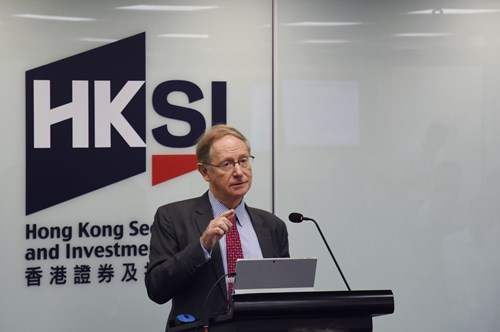
John G. Greenwood, OBE, SBS is a British monetary economist known internationally for his work on monetary policy, exchange rate regimes, and the evolution of financial systems in Asia and elsewhere. He graduated with a Master of Arts degree from the University of Edinburgh in 1970 before undertaking postgraduate economic research at Tokyo University from 1970 to 1974, during which time he also learned Japanese. During this period, he translated Money and Banking in Contemporary Japan by Yoshio Suzuki (Yale University Press) into English and served as a visiting research fellow at the Bank of Japan.
In 1974 Greenwood joined G.T. Management, an asset management firm in Hong Kong, as Chief Economist. Between 1976 and 1996 he published and edited the Asian Monetary Monitor, a bi monthly journal providing monetary analysis of economic developments in the East Asia Pacific region. As editor of the Asian Monetary Monitor, he proposed the currency board scheme that stabilised the Hong Kong dollar in 1983, a framework adopted by the Hong Kong Government which remains in operation today. He also served as editor of two further G.T. publications, Global Trends and Emerging Market Trends.
Greenwood’s career in Hong Kong included wider responsibilities in the city’s financial infrastructure. He became Chairman of G.T. Management (Asia) Ltd in 1986, acted as a council member and director of the Hong Kong Futures Exchange Clearing Corporation from 1989 to 1991, and served on the Council of the Stock Exchange of Hong Kong from 1992 to 1993. He was also an economic adviser to the Hong Kong Government during 1992 and 1993.
In early 1994 he relocated to the United States, transferring to G.T. Capital Management in San Francisco as Chief Economist. In June 1994 he was awarded the Order of the British Empire in recognition of his standing as an economist and for his contributions to the Hong Kong Government and other public bodies. Following the acquisition of G.T. Management by Invesco, he continued his career as Chief Economist of Invesco, coordinating global macroeconomic research and supporting investment teams across multiple jurisdictions until his retirement.
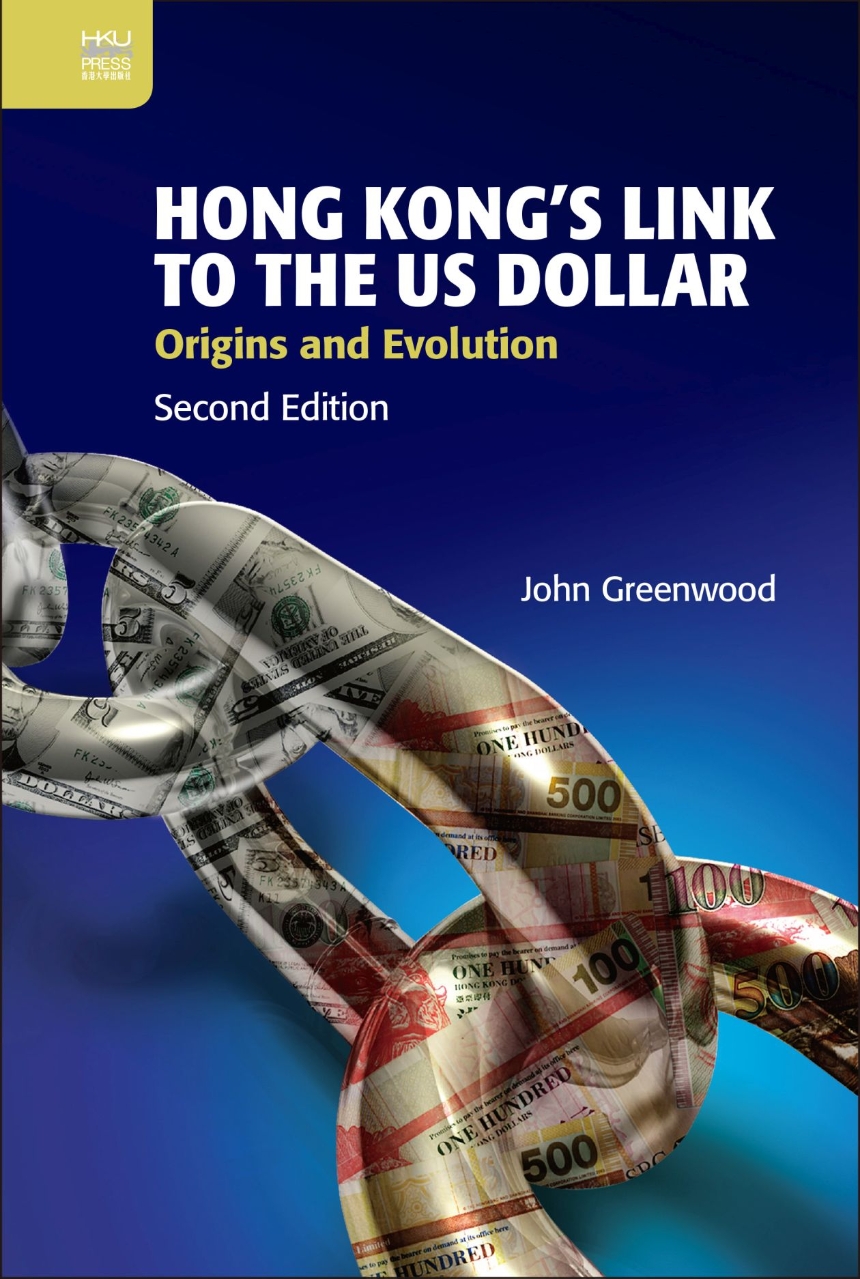
In November 1998 he was appointed as a member of the Committee on Currency Board Operations of the Hong Kong Monetary Authority, a position he held for many years. He also became a member of the Shadow Monetary Policy Committee operating under the auspices of the Institute of Economic Affairs in London. His book Hong Kong’s Link to the US Dollar: Origins and Evolution was published by Hong Kong University Press in 2007, with an updated second edition released in 2022.
Over several decades, Greenwood published widely in both academic and financial media, including The Cato Journal, The Wall Street Journal, The Financial Times, and the Far Eastern Economic Review. He has been a frequent speaker at international conferences, a regular guest on broadcast channels, and a lecturer at the Business School of Cardiff University and Heriot Watt University.
Today, in retirement, Greenwood continues to contribute independent monetary analysis through the International Monetary Monitor, extending the tradition of rigorous research he established with the Asian Monetary Monitor and applying it to contemporary global economic issues.

About IMM
The widespread outbreak of inflation in 2021–23 which occurred in the wake of the Covid-19 pandemic was not predicted by the broad mass of consensus, mainly Keynesian or Neo-Keynesian, economists. Only a handful of monetary economists successfully predicted both the timing and the scale of the inflation. Even today the mainstream economics profession refuses to acknowledge that the monetarists were correct in their predictions and continues to attribute the inflation to supply chain disruptions, fiscal expenditures, or other non monetary sources. The mainstream of the profession also maintains its denial that excess monetary growth in 2020–21 was the primary source of the inflation. Moreover, consensus economics has not suggested any clear proposition to prevent a repetition of this episode.
It is clear from this near universal failure of modern macroeconomics, as taught in universities and graduate schools around the world, that an alternative theory of inflation and nominal spending is required. Instead of the three equation model that forms the foundation of Neo-Keynesian macroeconomic analysis, the International Monetary Monitor uses the Quantity Theory of Money to make its forecasts and to explain the major trends in aggregate spending.
The author of International Monetary Monitor, John Greenwood, successfully applied the Quantity Theory of Money during his time as a research fellow in Japan from 1970 to 1974, during his career as a business economist for G.T. Management in Asia, notably through the publication of the Asian Monetary Monitor, and subsequently when he moved to London as Chief Economist for Invesco from 1999 to 2021. In addition, his diagnosis of the exchange rate problems of Hong Kong during the early 1980s and his proposed solution were grounded in historical studies of different monetary standards and in a fundamentally monetarist approach to the operation of banking systems.
It therefore seemed entirely appropriate, upon retirement from Invesco, to establish a consultancy capable of analysing monetary problems and making forecasts based on monetary analysis across the global economy. On this basis the International Monetary Monitor was created to continue and broaden the work previously conducted through the Asian Monetary Monitor, but on a global rather than regional scale. In this sense, the International Monetary Monitor is the direct successor to, and intellectual progeny of, the Asian Monetary Monitor.
This website provides an archive with links to all articles published in the Asian Monetary Monitor, including a dozen episodes from Asian monetary history, and all newsletters published by the International Monetary Monitor, together with other related materials. These include videos, links to books and published articles, and a series of framework articles explaining the methodology of monetary economics. These framework articles set out the fundamentals of how monetary developments, and the time lags involved, can explain the key features of any business cycle, from monetary changes to asset price movements, through economic activity, and finally to goods and services price inflation.